
Thermal Imaging Home Inspections in Ottawa and Gatineau
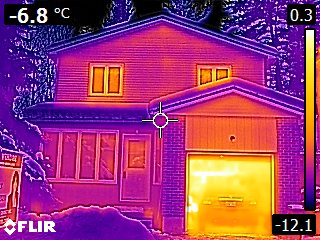
Thermal imaging is a valuable diagnostic tool that can provide additional information during a professional home inspection. Using an infrared camera, temperature differences across accessible building surfaces can be identified and evaluated for patterns that may indicate moisture intrusion, insulation deficiencies, air leakage, electrical overheating or other conditions requiring further investigation.
Inspec-Pro Home Inspections provides thermal imaging inspection services throughout Ottawa, Gatineau and surrounding communities. When used together with a visual inspection, moisture measurements and professional building knowledge, thermography can help identify conditions that may not be apparent through visual inspection alone.
Thermal imaging does not allow an inspector to see through walls and does not by itself confirm the cause of a temperature anomaly. Findings are interpreted in context and, where appropriate, additional investigation or specialist evaluation may be recommended.

What Is a Thermal Imaging Inspection?
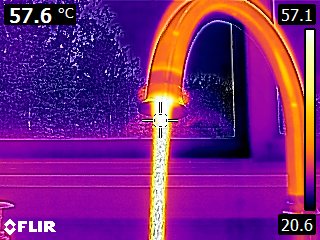
A thermal imaging inspection uses infrared technology to measure and display surface temperature differences. These temperature patterns can provide useful diagnostic information about areas of a home that warrant closer examination.
Conditions such as missing or displaced insulation, air leakage, moisture-related cooling, abnormal electrical heating and some plumbing or HVAC concerns can sometimes produce identifiable thermal patterns. Environmental conditions, building materials and temperature differences can affect what is visible through thermography, which is why infrared findings should always be interpreted by a trained inspector and considered alongside other inspection observations.
If you have questions about thermal imaging or would like to request an inspection, contact Inspec-Pro Home Inspections.
What Can Thermal Imaging Help Identify?
Depending on conditions at the time of the inspection, thermal imaging may help identify or further investigate:
- Possible moisture intrusion
- Insulation deficiencies
- Air leakage around building components
- Abnormal electrical heating
- Heating and cooling irregularities
- Possible plumbing leakage
- Temperature anomalies at walls and ceilings
- Areas of heat loss
- Some flat-roof moisture patterns
- Other conditions requiring further investigation
Thermal imaging findings are evaluated together with visible conditions and other available information. Where appropriate, a moisture meter or other inspection method may be used to help determine whether a thermal anomaly warrants additional investigation.
Thermal Imaging for Home Buyers, Sellers and Homeowners
Thermal imaging can provide useful additional information during pre-purchase home inspections, post-purchase home inspections and pre-listing home inspections.
For home buyers, infrared imaging can help identify areas that deserve closer attention before making a purchasing decision. Sellers may use thermal imaging as part of a pre-listing inspection to better understand visible and thermally indicated conditions before placing a property on the market. Homeowners can also benefit when investigating moisture concerns, insulation performance, unusual temperature differences or other building-performance issues.
Thermal Imaging and Moisture Investigation
Moisture problems are not always immediately visible. Under suitable conditions, evaporation and differences in thermal conductivity can create temperature patterns that help an inspector locate areas requiring closer examination.
An infrared camera does not directly measure moisture. When a suspicious thermal pattern is observed, the area may be evaluated using a moisture meter and other available inspection methods. This combination provides more reliable information than relying on thermal imaging alone.
Thermal Imaging and Insulation Deficiencies
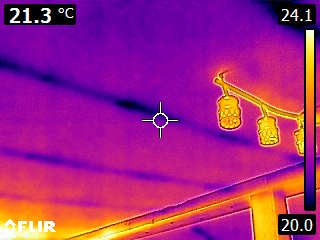
Missing, displaced or poorly installed insulation can sometimes create recognizable temperature differences across ceilings and walls. When indoor and outdoor conditions provide a sufficient temperature difference, thermal imaging can help identify areas where insulation performance may be inconsistent.
These observations can help homeowners and buyers determine where additional investigation or improvements may be beneficial for comfort, moisture management and energy performance.
Electrical and Mechanical Temperature Anomalies
Electrical connections and components operating at abnormal temperatures can sometimes produce identifiable thermal patterns. Thermal imaging may also reveal temperature differences associated with heating, cooling or distribution concerns.
Thermography is not a substitute for electrical or HVAC testing. Where an abnormal condition is identified, evaluation by an appropriately qualified contractor may be recommended.







Why Use Thermal Imaging During a Home Inspection?
Non-Invasive Diagnostic Information
A residential home inspection is primarily visual and non-invasive. Thermal imaging complements that process by providing additional information about surface-temperature patterns without opening walls, ceilings or other building assemblies.
Better Information for Decision-Making
Thermal imaging can help direct attention toward areas requiring closer investigation and can provide useful supporting information when combined with the inspector’s visual observations, moisture measurements and understanding of building systems.
Documented Findings
Relevant thermal findings can be documented with infrared images and explained in the inspection report. Significant observations are presented in context, along with practical recommendations where further investigation, repair or monitoring is appropriate.
Professional Thermal Imaging Inspections in Ottawa and Gatineau
Inspec-Pro Home Inspections has provided residential inspection services in Ottawa, Gatineau and the surrounding region since 2014. Thermal imaging is used as a diagnostic tool to complement our knowledge of building science, construction systems, moisture management and residential inspection practices.
Our thermography equipment and inspection procedures are used to identify and evaluate temperature anomalies within the limitations of a visual, non-invasive home inspection. Findings are interpreted in the context of the property rather than relying on infrared images alone.
Following the inspection, you will receive a detailed digital report with relevant photographs and thermal images. We commit to delivering the inspection report within 48 hours; if we fail to meet that commitment, the inspection is free.
If you need a thermal imaging home inspection in Ottawa, Gatineau or a surrounding community, request an inspection or contact us today.