

Buying a home involves much more than evaluating finishes, room sizes and appearance. A professional home inspection examines the visible and accessible systems and components of the property to help a buyer better understand its condition at the time of the inspection.
At Inspec-Pro Home Inspections, we inspect residential properties throughout Ottawa, Gatineau and the Outaouais. The inspection is visual and non-invasive and focuses on visible conditions that may affect safety, moisture management, durability, performance, maintenance and the expected useful life of major components.
A home inspection is not a pass-or-fail test and cannot guarantee that every concealed condition will be discovered. The objective is to provide independent information that helps buyers make better-informed property decisions.
What Is Included in an Ottawa Home Inspection?
The exact scope depends on the property, its construction, weather conditions and what is safely accessible on the day of the inspection. A typical residential inspection considers the major visible and accessible systems described below.
Roofing and Roof Drainage
The roof is one of the home’s primary weather-protection systems. Roofing materials, flashings, penetrations, chimneys, gutters and downspouts are examined from accessible locations using methods appropriate to the property’s height, slope, weather and safety conditions.
Visible deterioration, damaged roofing, drainage concerns, debris accumulation and evidence of previous or active leakage may be documented. When the roof cannot be safely accessed because of height, snow, ice, steep slope or another limitation, the report should clearly identify that limitation.
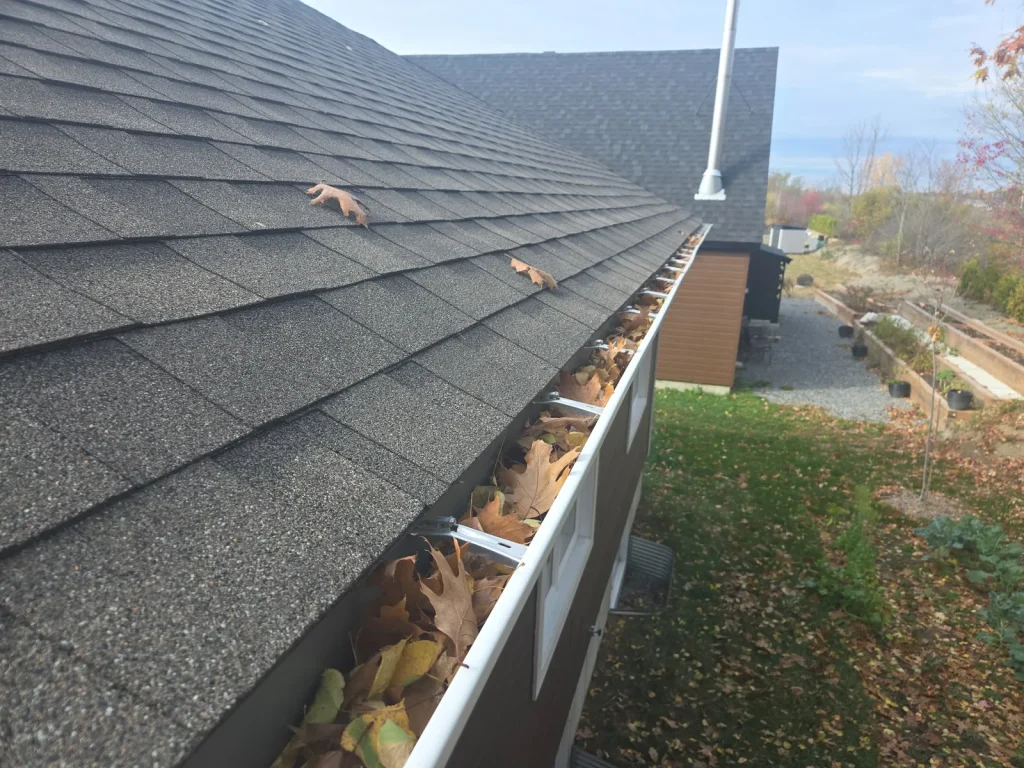
From an Inspec-Pro Inspection: This gutter contained substantial organic debris that could restrict normal drainage. Conditions such as this are documented so buyers understand both the visible condition and the maintenance required.
Effective roof drainage is important because water that is not directed away from the building can contribute to deterioration of exterior components and moisture around the foundation.
Exterior Walls, Windows and Doors
Exterior components form part of the building envelope and help protect the structure from water, wind and temperature changes.
The inspection typically considers accessible cladding, masonry, trim, windows, exterior doors, flashings, sealants, decks, porches, stairs, guards, handrails and visible drainage conditions.
Cracked sealants, deteriorated masonry, damaged siding or poorly managed drainage may seem minor individually, but repeated moisture exposure can eventually affect concealed materials behind the exterior finishes.
Foundation and Visible Structural Components
Accessible foundation walls and structural components are examined for visible cracking, displacement, deterioration, moisture entry, damaged framing and evidence of unusual movement or alteration.
Foundation cracks are relatively common and do not automatically indicate a significant structural problem. Their orientation, width, location and surrounding conditions all matter. When visible evidence suggests significant movement or when the cause cannot be determined during a visual inspection, additional evaluation may be recommended.
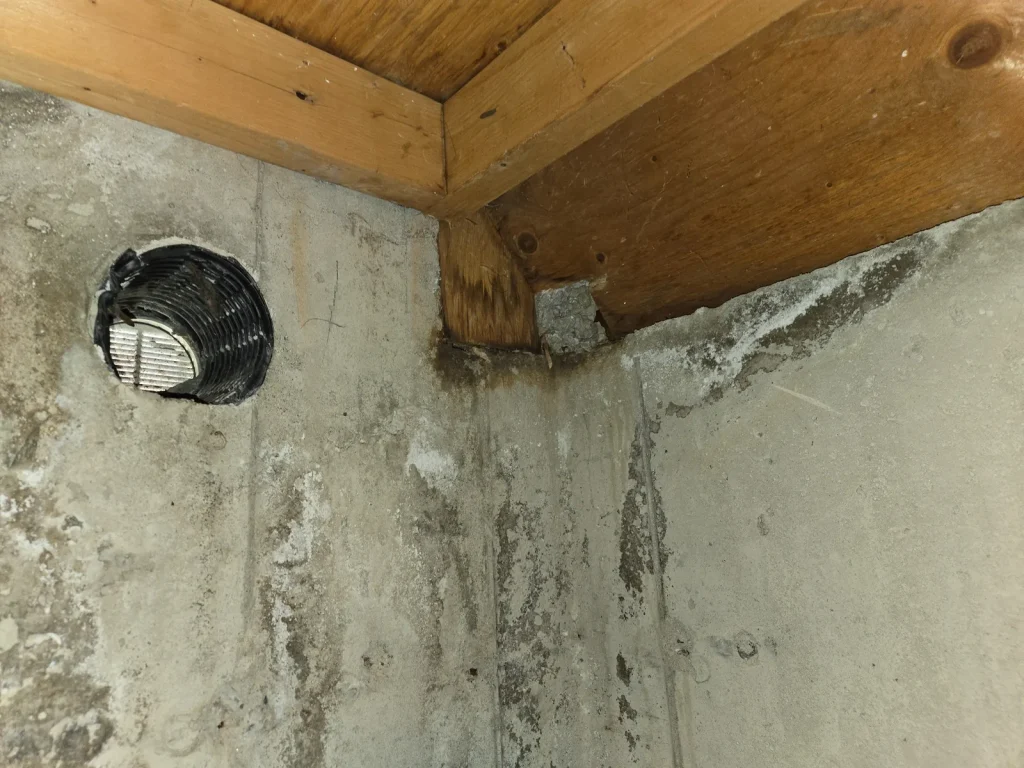
From an Inspec-Pro Inspection: Visible staining was present near the foundation and wood framing. Moisture-related observations are evaluated together with drainage, exterior conditions and surrounding materials rather than relying on a single symptom.
Grading and Drainage Around the Home
Water management around the foundation is an important part of building durability. The inspection considers visible grading, downspout discharge locations, window wells, retaining walls, exterior drains and areas where water may collect near the home.
Ottawa’s seasonal snow accumulation, freeze-thaw cycles and spring runoff can significantly change drainage conditions throughout the year. An inspection therefore represents conditions that are visible and accessible at the time of the inspection.
Electrical System
Accessible electrical components are visually examined for visible safety and performance concerns. This may include the service entrance, distribution panel, breakers, visible wiring, receptacles, switches, grounding and bonding components, junction boxes and ground-fault protection where applicable.
Older homes may contain systems that have been modified or expanded over many years. A home inspection can identify visible concerns, but it is not an exhaustive electrical inspection. Significant concerns may warrant further evaluation by a qualified electrical contractor.
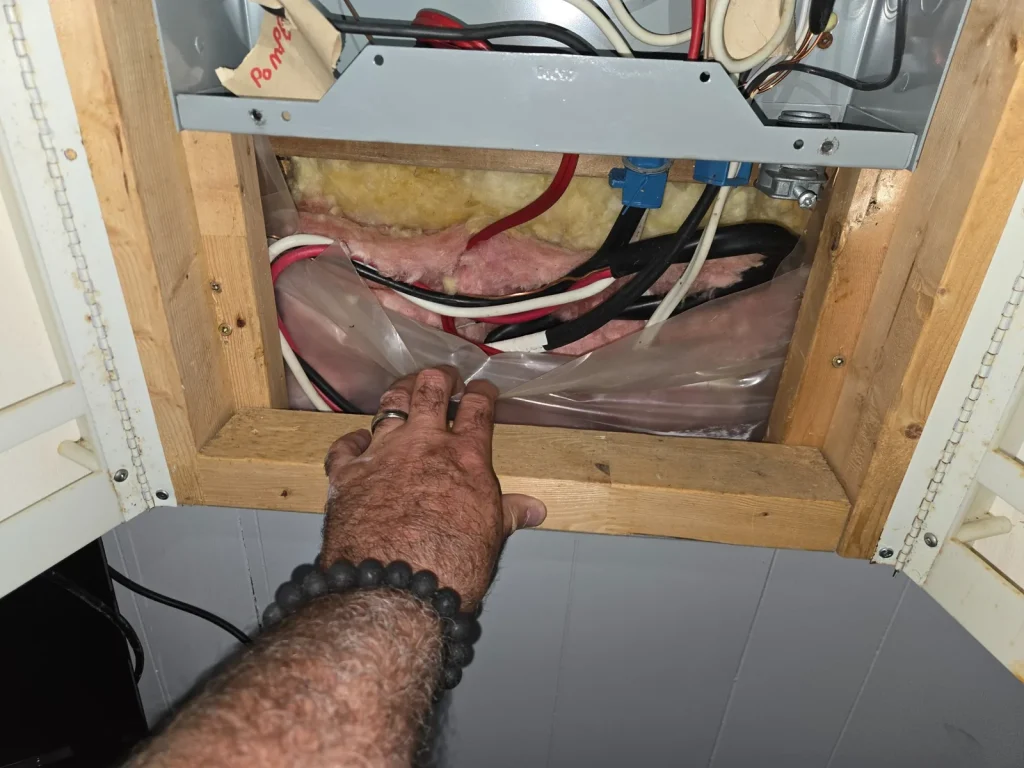
From an Inspec-Pro Inspection: Accessible electrical areas can reveal wiring alterations, installation concerns or other conditions that are not visible from the finished room alone.
Plumbing System
Accessible plumbing components are inspected for visible leakage, deterioration and functional concerns. This generally includes visible water-supply piping, drain and waste piping, fixtures, faucets, toilets, water-heating equipment, shutoff valves and drainage performance.
Piping concealed inside walls, ceilings, floors or underground cannot normally be evaluated during a standard visual inspection.
For buyers concerned about the underground sewer lateral, a sewer camera inspection can provide additional information about visible conditions inside the accessible drain line.
Heating and Cooling Systems
Heating and cooling equipment is examined using normal operating controls when conditions permit. The inspection may include furnaces, boilers, air-conditioning equipment, heat pumps, distribution systems, thermostats, accessible fuel-supply components and visible venting.
The goal is to identify visible deficiencies and operating concerns rather than predict the exact remaining life of equipment. Older equipment may continue to operate satisfactorily, while newer equipment can still have installation or maintenance concerns.
Attic, Insulation and Ventilation
Accessible attic areas can provide valuable information about the roof structure and building envelope.
The inspection may consider insulation coverage, ventilation, roof sheathing, moisture staining, condensation, air leakage, exhaust ducts and accessible framing components.
From an Inspec-Pro Inspection: Loose-fill insulation and attic conditions are evaluated for coverage, disturbance, ventilation and visible moisture-related concerns. Attics frequently provide clues about how the building envelope is performing.
Attic moisture can result from several factors, including air leakage, indoor humidity, inadequate ventilation and exterior weather conditions. The exact cause cannot always be confirmed during a visual inspection, but visible evidence can identify where further investigation is appropriate.
Basements and Crawlspaces
Basements and crawlspaces may reveal important information about moisture management, foundation conditions and the structure above.
The inspection may include visible foundation walls, floor structure, framing, moisture staining, plumbing leakage, drainage systems, insulation, sump equipment and accessible mechanical systems.
Finished basements naturally limit what can be observed because foundation walls, framing, plumbing and electrical systems may be concealed behind finishes.
Interior Rooms, Stairs and Safety Components
The interior inspection generally includes visible and accessible walls, ceilings, floors, windows, doors, stairs, guards, handrails, installed fixtures, electrical receptacles, plumbing fixtures and visible evidence of moisture.
Minor cosmetic imperfections are not normally the primary focus. Greater attention is given to conditions that may affect function, safety, moisture management, durability or maintenance.
Kitchens and Bathrooms
Kitchens and bathrooms combine plumbing, electrical, ventilation and moisture-management systems within relatively small areas.
The inspection may consider fixtures, faucets, drainage, cabinetry around plumbing, ventilation, electrical receptacles, ground-fault protection where applicable, visible leakage, sealants and moisture-prone areas.
Bathrooms are also common locations for condensation and ventilation concerns.
Thermal Imaging During an Ottawa Home Inspection
Infrared thermal imaging can be a useful supplementary diagnostic tool. A thermal camera measures surface-temperature differences and may help identify patterns associated with moisture, air leakage, missing or inconsistent insulation, heating performance and certain electrical or mechanical conditions.
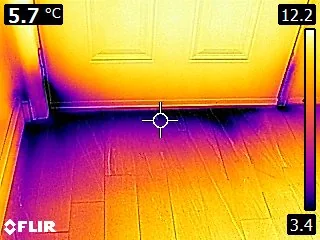
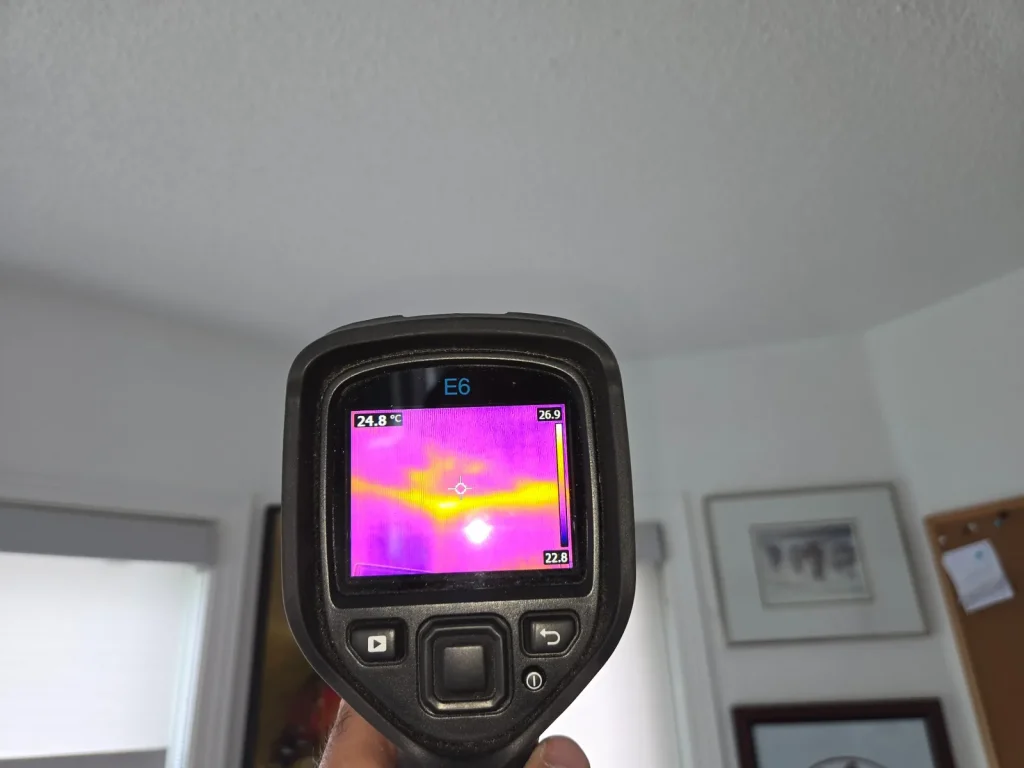
From an Inspec-Pro Inspection: This thermal image shows a cooler surface pattern near an exterior door. Thermal patterns are interpreted together with building conditions and, when appropriate, additional moisture investigation.
Thermal imaging does not see through walls and does not independently prove the presence of moisture. An unusual thermal pattern identifies an area that may warrant closer examination.
Learn more about our thermal imaging and thermographic inspection services.
What a Home Inspection Cannot See
A home inspection is visual and non-invasive. An inspector generally cannot see behind finished walls, beneath flooring, inside concealed cavities or underground piping without specialized equipment.
Furniture, stored belongings, finished surfaces and unsafe or inaccessible areas can also limit the inspection. Weather conditions such as snow and ice may prevent direct observation of roofing materials, grading or exterior components.
A professional report should clearly describe significant limitations rather than imply that every hidden condition in a property can be discovered.
Does a Home Inspection Determine Whether a House Meets Code?
A standard home inspection is not a building-code compliance inspection.
Residential properties may contain components installed under different regulations or during different periods. The inspector’s role is to evaluate visible conditions and identify concerns that may affect safety, function, durability, moisture management or maintenance.
When a condition requires specialized assessment, the report may recommend evaluation by an appropriate qualified professional.
Should You Attend the Inspection?
Whenever possible, attending the inspection can be valuable. It gives buyers an opportunity to see important findings firsthand, ask questions, learn where major systems are located and better understand future maintenance requirements.
For first-time buyers in particular, this can make the inspection report easier to understand once the inspection is complete.
How Long Does an Ottawa Home Inspection Take?
Inspection time depends on the size, age, condition and complexity of the home, as well as accessibility and the number of systems present.
A typical residential inspection may require several hours. Larger, older or more complex properties may require additional time. A thorough inspection should not be rushed simply to meet a predetermined schedule.
What Happens After the Inspection?
Following the inspection, Inspec-Pro provides a detailed digital report containing photographs, observations and practical recommendations.
The report can help identify significant visible concerns, safety-related items, maintenance priorities, components requiring repair, areas requiring monitoring and conditions that may warrant additional professional evaluation.
Inspection reports are provided within 48 hours following the inspection.
What Problems Are Commonly Found in Ottawa Homes?
Every property is different, but home inspections commonly identify concerns involving roofing, exterior drainage, foundation cracking, basement moisture, aging electrical components, plumbing leakage, attic insulation and ventilation, heating and cooling equipment, exterior sealants, decks and stairs.
For more examples, see our guide to common home inspection problems in Ottawa, Gatineau and the Outaouais.
Do I Need a Sewer Camera Inspection Too?
A standard home inspection evaluates visible plumbing within the property but cannot normally evaluate the full underground sewer lateral.
A sewer camera inspection can provide additional information about visible conditions inside an accessible line, including root intrusion, displaced joints, cracking, deterioration, blockages and standing water.
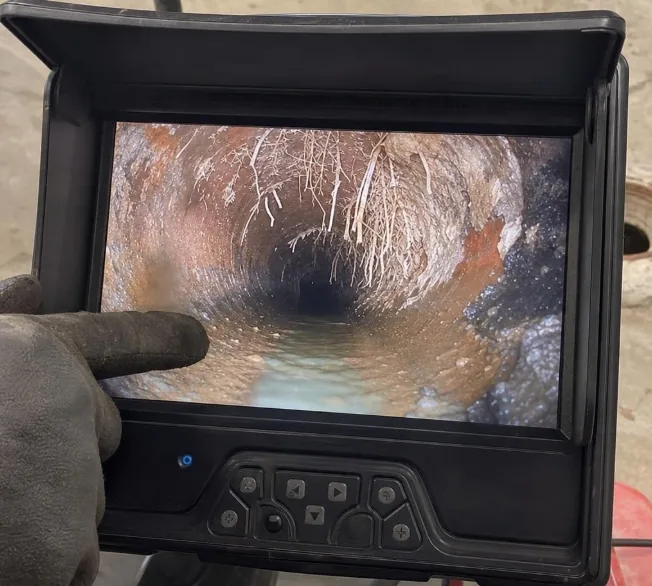
From an Inspec-Pro Inspection: Root intrusion was visible inside this drain line during a sewer-camera inspection. This type of condition cannot normally be identified during a standard visual home inspection.
A sewer-camera inspection can be particularly useful when purchasing an older property or where the drainage history is uncertain.
Learn more about sewer camera inspections in Ottawa and Gatineau.
Frequently Asked Questions
What does a home inspector check first?
There is no required starting point. The sequence normally depends on the property, weather, accessibility and the inspector’s workflow. The important point is that the major visible and accessible systems and components are evaluated systematically.
Does a home inspector look for mould?
A home inspector may identify visible conditions that appear consistent with mould or conditions favourable to microbial growth, such as elevated moisture, staining or condensation. A standard home inspection is not a laboratory mould assessment.
Can a home inspector find hidden water leaks?
Sometimes visible evidence or thermal patterns can indicate a possible concealed moisture concern. However, a visual inspection cannot guarantee detection of leakage hidden inside walls, ceilings or other inaccessible areas.
Does a home inspection include the roof?
Yes. Roofing systems are normally evaluated when safely accessible. Weather, snow, ice, height, slope and other safety conditions can limit direct access.
Does a home inspection include electrical and plumbing systems?
Visible and accessible electrical and plumbing systems are normally included in a standard residential home inspection.
Should I get a home inspection on a newer home?
Newer homes can still contain installation deficiencies, incomplete work, moisture concerns or components requiring correction. The age of the home alone does not determine whether an inspection may be useful.
Professional Home Inspections in Ottawa
Inspec-Pro Home Inspections provides professional residential inspection services throughout Ottawa and surrounding communities.
Our inspections are designed to provide objective information about the visible condition of the property so buyers can better understand what they are purchasing and plan appropriately for repairs and maintenance.
If you are purchasing a property in Ottawa, learn more about our pre-purchase home inspections or request inspection availability and a quote.