
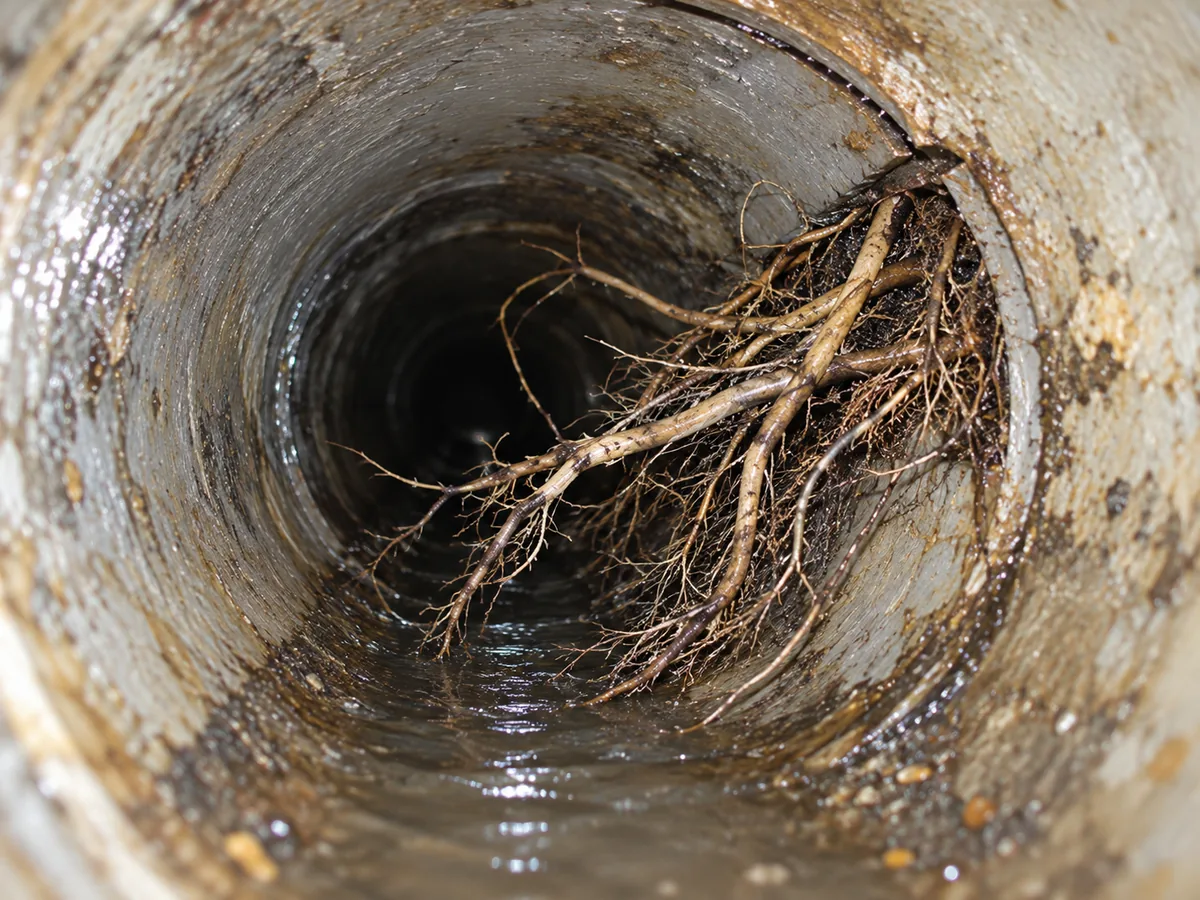
Illustrative image showing tree root intrusion inside a residential sewer lateral.
Buying a home involves evaluating far more than what can be seen during a walkthrough. Roofing, electrical systems, plumbing fixtures, heating equipment, foundations and visible drainage conditions can all be assessed during a home inspection, but one important component remains largely concealed: the sewer lateral beneath the property.
A sewer camera inspection provides a view inside the accessible portion of that buried drainage pipe. It is not necessary for every home purchase, but there are situations where the additional information can be valuable before a buyer takes ownership.
Quick Answer: Should You Get a Sewer Camera Inspection Before Buying?
A sewer camera inspection may be worth considering when the condition of the sewer lateral is unknown, the property is older, mature trees are located near the likely sewer route, drainage problems have been reported, previous sewer repairs are suspected, or a buyer simply wants more information about a component that cannot normally be assessed during a standard home inspection.
The goal is not to predict every future sewer problem. It is to identify visible conditions inside the accessible piping that could affect drainage, maintenance or future repair decisions.
For some properties, the camera may show a sewer lateral that appears reasonably clear and serviceable at the time of inspection. For others, it may reveal roots, obstructions, displaced sections, deterioration or other conditions that warrant additional evaluation.
What a Standard Home Inspection Cannot Tell You About the Sewer Lateral
A residential pre-purchase home inspection evaluates visible and accessible components of the property. Plumbing fixtures, accessible supply piping, visible drainage piping and functional drainage can normally be assessed as part of that inspection.
The buried sewer lateral is different.
Once the drainage pipe leaves the building and travels underground toward the municipal sewer system, its condition cannot normally be determined by examining the plumbing inside the house. A sink or toilet may drain normally while conditions farther along the lateral remain concealed.
A sewer camera is therefore a targeted inspection tool rather than a replacement for a standard home inspection. The home inspection provides the broad assessment of the property; the sewer camera provides additional information about one specific concealed component.
For a broader explanation of the systems assessed during an inspection, see what a home inspector checks in an Ottawa home.
When Is a Sewer Camera Inspection Worth Considering?
There is no single rule that makes a sewer camera inspection necessary for every property. The decision should be based on the home, the information available and the buyer’s tolerance for uncertainty.
Situations where an inspection may be particularly useful include:
- the sewer lateral’s age or condition is unknown;
- mature trees are located near the likely sewer route;
- previous backups, slow drainage or recurring blockages have been reported;
- evidence suggests previous excavation or sewer work;
- the buyer is purchasing an older property with limited information about underground services; or
- the buyer wants additional information about the sewer lateral before assuming responsibility for the property.
The age of a house alone does not establish that its sewer lateral is defective. The City of Ottawa notes that service-line risk can depend on factors including construction material, soil conditions and use, and that individual properties can differ. Read the City of Ottawa’s information on service-line risk.
An inspection therefore provides more useful information than assuming a buried sewer is either good or bad based only on the age of the house.
What Can a Sewer Camera Inspection Reveal?
Where access and conditions permit, a camera inspection can provide information about the visible interior of the sewer lateral.
Conditions that may be observed include root intrusion, accumulated debris or obstruction, displaced or misaligned sections, visible deterioration, standing water and other conditions that may affect drainage.
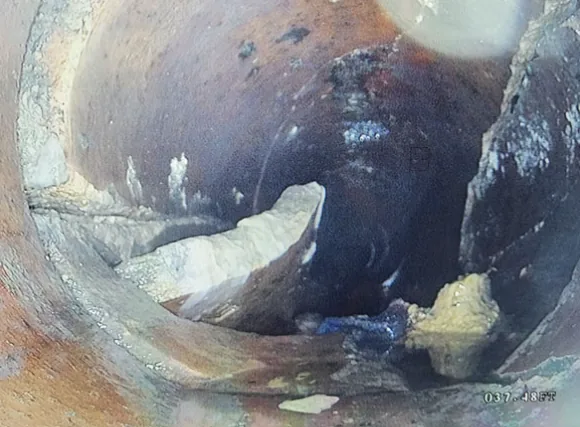
These observations can help a buyer determine whether additional investigation, cleaning, monitoring or repair assessment may be appropriate.
The City of Ottawa identifies tree roots, waste and debris, collapse, misalignment and other structural defects among potential causes of problems affecting sewer laterals.
A camera inspection still needs to be interpreted carefully. Seeing a condition is not the same as determining its exact cause, remaining service life or repair cost.
Why the Sewer Lateral Matters for Ottawa Home Buyers
Responsibility for the sewer lateral is an important issue for Ottawa buyers to understand.
According to the City of Ottawa, the homeowner is generally responsible for the portion of the sewer lateral between the home and the property line, while the City is generally responsible for the portion between the property line and the municipal sewer system.
See the City of Ottawa’s information on responsibility for sewer laterals.
That means part of the buried drainage system associated with a property can become the homeowner’s maintenance and repair responsibility after purchase.
A sewer camera inspection does not determine legal or financial responsibility for a repair. It can, however, provide visual information about the accessible pipe that may help identify whether further investigation is warranted.
What a Sewer Camera Inspection Cannot Determine
A sewer camera is useful, but it has limitations.
The inspection depends on having a suitable access point and on the camera being able to travel through the pipe. Heavy debris, standing water, blockage, sharp changes in direction, restricted access or other conditions may prevent portions of the lateral from being viewed.
The camera also shows visible conditions at the time of inspection. It does not guarantee future performance or determine the remaining service life of the piping.
A sewer camera inspection generally cannot, by itself:
- guarantee that the lateral will remain trouble-free;
- identify every condition concealed behind debris or standing water;
- establish the precise cause of every observed condition;
- determine ownership or repair responsibility without additional information;
- provide an exact repair cost; or
- replace specialized plumbing or drainage evaluation where significant concerns are identified.
Those limitations matter. A useful inspection should reduce uncertainty where possible without pretending to eliminate it.
What Happens If the Camera Finds a Concern?
A finding does not automatically mean that the sewer lateral needs to be excavated or replaced.
The appropriate next step depends on the condition observed. Accumulated material may warrant cleaning. Root intrusion may justify additional plumbing or drainage evaluation. A visible displacement or damaged section may warrant locating the affected area and obtaining a repair assessment. Other conditions may simply justify monitoring.
The important point for a buyer is that the inspection can provide information before ownership rather than after a drainage problem has already occurred.
Sewer Camera Inspection vs. a Standard Home Inspection
These inspections serve different purposes.
A standard home inspection evaluates the home’s visible and accessible systems and components as a whole. It can include roofing, exterior conditions, structure, electrical systems, plumbing, heating and cooling equipment, insulation, ventilation, interiors and visible moisture-related concerns.
A sewer camera inspection is much narrower. It focuses specifically on the accessible interior of the buried sewer lateral.
The two services can therefore complement one another rather than duplicate each other.
You can also review common problems found during home inspections in Ottawa, Gatineau and Outaouais for examples of other conditions buyers may encounter.
Should You Add a Sewer Camera Inspection to Your Pre-Purchase Inspection?
The answer depends on the property.
For a home with a known recent sewer installation, good documentation and no indications of drainage concerns, a buyer may decide that the additional inspection is unnecessary.
For a property where the sewer condition is unknown, or where age, trees, drainage history or other observations create additional uncertainty, a camera inspection may provide useful information before closing.
The purpose is not to find something wrong with every sewer. It is to make a better-informed purchasing decision about a component that would otherwise remain largely out of sight.
Frequently Asked Questions
Does every Ottawa home need a sewer camera inspection?
No. The value of the inspection depends on the property, available information and the buyer’s concerns. It can be particularly useful where the lateral’s condition is unknown or there are factors that justify additional investigation.
Is a sewer camera inspection included in a standard home inspection?
It is a separate targeted inspection. A standard home inspection evaluates visible and accessible plumbing components but normally cannot determine the condition inside a buried sewer lateral.
Can a sewer camera identify tree roots?
Visible root intrusion can often be observed when the camera can access the affected portion of the pipe. The camera does not necessarily determine the source of the roots or who may be responsible for them.
Can the entire sewer lateral always be inspected?
No. Access, blockage, standing water, pipe configuration or other restrictions can limit how far the camera can travel and what can be viewed.
Should newer homes have a sewer camera inspection?
A newer home is not automatically free from sewer concerns, but age alone should not determine whether an inspection is warranted. Property history, installation conditions, drainage performance and the buyer’s desired level of due diligence are more useful considerations.
What happens if a problem is found?
The recommendation depends on the condition observed. Further steps may include cleaning, locating the affected section, monitoring, specialized plumbing evaluation or obtaining a repair assessment.
Sewer Camera Inspections for Ottawa Home Buyers
Inspec-Pro provides sewer camera inspections as a separate service for buyers who want additional information about the accessible sewer lateral before purchasing a property.
The inspection can be completed alongside a pre-purchase home inspection or arranged as a focused service where appropriate.
For local inspection services, see Inspec-Pro home inspections in Ottawa, or request a sewer camera inspection for a property you are considering.